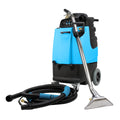

An industrial vacuum is built to run for hours, pick up materials a household machine cannot touch, and survive jobsite abuse. The wrong one is a costly mistake. Match the vacuum class to the actual debris you need to recover and the duty cycle the operators will run.
Three classes of industrial vacuum
1. Dry vacuums
For dust, fine particulate, sawdust and general debris. Most use a paper or fabric filter bag plus a HEPA secondary filter. Best for woodshops, drywall sanding, light demolition and routine facility cleaning.
2. Wet/dry vacuums
Pick up liquid as well as solid debris. Heavy duty units handle 15 to 55 gallon drums. Common on construction sites, in plumbing trades and for spill response. Browse our vacuum collection for wet/dry options.
3. Hazardous material vacuums
HEPA or ULPA filtered units rated for asbestos, lead, silica, mold and other regulated materials. These carry specific certifications (HEPA at 99.97 percent at 0.3 microns minimum, ULPA at 99.999 percent at 0.12 microns). Required for OSHA regulated work.
Motor size and what it actually means
Vacuum power is measured in two ways: airflow (cubic feet per minute, CFM) and water lift (inches of water column). CFM moves the debris from the pickup tool through the hose. Lift is the suction force that pulls heavy materials. A typical industrial vacuum runs 100 to 200 CFM and 80 to 150 inches of lift.
Single motor vacuums work for most tasks. Twin motor units run heavier duty cycles without overheating. Three motor units handle continuous duty in industrial cleanup.
Filtration explained
Standard pleated filters trap particles down to 5 microns. HEPA filters trap 99.97 percent of particles at 0.3 microns. ULPA goes further. The level you need depends on what you are picking up. Wood dust and drywall: standard plus HEPA. Lead paint: HEPA certified to UL 1017. Asbestos: HEPA with the appropriate sealed enclosure.
Tank capacity
Smaller tanks (10 to 16 gallon) are easier to empty but fill quickly on a real job. Mid range (20 to 30 gallon) handles most jobsite debris before needing a swap. Large drum units (55 gallon) run all day for major cleanups but require a hand truck or attached cart for transport.
Hose, cord and accessories
Look for a 25 foot hose minimum and a 50 foot cord on stationary units. Reach matters — every 10 feet of extra hose is 10 fewer outlet trips. Tool start ports run a power tool through the vacuum so the dust gets captured at the source.
Build quality flags to watch
- Stainless or polyethylene tank — survives drops, resists rust
- Thermally protected motor — auto shutoff prevents burnout
- Smooth interior corners — easier to dump and clean
- Caster wheels rated for the full tank weight
- UL listed cord rated for jobsite use
Match the machine to the work
Light commercial cleaning: a dry industrial upright or canister with HEPA secondary.
Construction cleanup: a 16 gallon wet/dry with stainless tank and tool start.
Restoration / water damage: a 30 gallon wet vac with check valve and pump out option.
Demolition / silica work: HEPA certified vacuum with auto filter shaker, tested to OSHA Table 1.
Frequently asked questions
Are bagless industrial vacuums good?
For wet pickup yes. For fine dust they release particles when emptying — bagged HEPA is safer for regulated dust.
Can I use shop air to clean filters?
Reverse pulse cleaning works on filters designed for it. Standard pleated filters tear under shop air pressure. Always check the manual before using compressed air.
How long should an industrial vacuum last?
5 to 10 years for a quality machine, depending on duty cycle. Replace the motor brushes and filter on schedule and the machine outlasts cheap consumer units many times over. Browse our industrial vacuum range for current options.