How we made this guide: picks, prices and specs come from our catalog and the makers' published specs, owner quotes come from customer reviews on our product pages and the guide was drafted with AI help, then checked and edited by Trevor Hall.
To clean wool carpet, vacuum it dry, test the dye, pre-spray a WoolSafe Approved detergent, then rinse-extract with low pressure, moderate or no heat and as little water as gets the soil out, and dry it fast. You need a vacuum you can run as plain suction, an extractor whose pressure you can turn down, such as the Sandia Sniper (from $2,499), and an air mover.
Quick answer
Time: a few hours for a room, plus drying. Difficulty: moderate, because wool punishes shortcuts. Rule of thumb: every step has a way to use less water, less alkalinity and less heat than a synthetic carpet job would. Over-wetting and high-alkaline chemistry cause the browning and shrinking owners fear. See our guide to how long carpet takes to dry after cleaning for the drying side.
Tools and equipment
You do not need a special wool machine. You need one that lets you control what it does to the fiber. Four traits matter: pressure you can turn down, heat you can switch off, strong water lift and a way to move air afterward. Browse all portable carpet extractors or the wider carpet extractor range with those traits in mind.

Adjustable pressure, optional heat
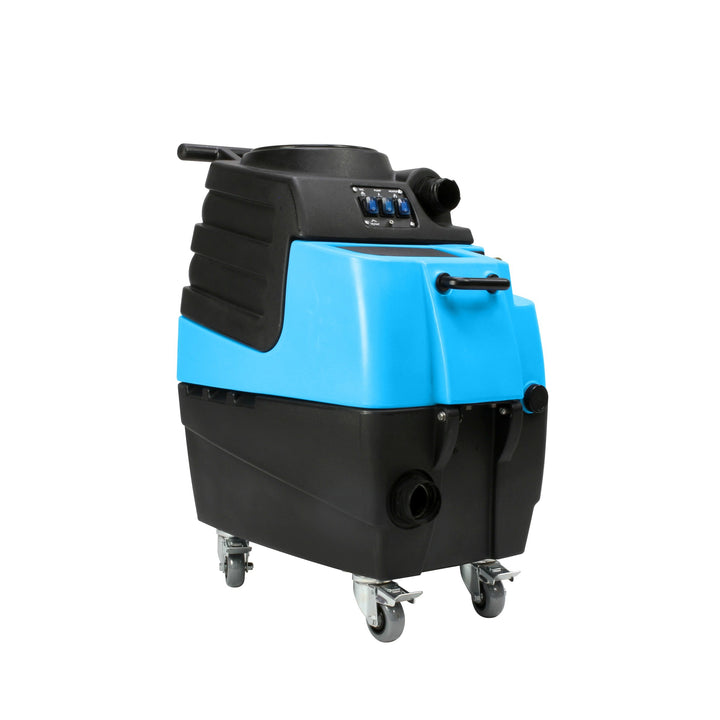
Sandia Sniper 12-Gallon Carpet Extractor - 500 PSI Adjustable Pump with Optional Heat - 80-2500
From $2,499 · 5.0 from 2 reviews
The 500 PSI pump is adjustable, so you can run it low on wool. Choose the 80-2500-H model if you want heat, or the 80-2500 for none.

Small jobs and rugs
Mytee S-300 Tempo Upholstery Spotter,1 gal., 55 PSI
$859 · 4.9 from 9 reviews
A cold-water, 55 PSI spotter with 85 in of water lift and 1 gallon tanks. Good for a small rug, a stair run or a stain.

Compact 120 PSI
EDIC Galaxy 5 Series Portable Carpet Extractor
$1,878
120 PSI, 136 in of water lift and 57 lb, with a 5-year parts and labor warranty as listed.

No heater at all
Powr-Flite Carpet Extractor 10 Gallon Non-Heated 100 PSI PFX1080
$2,000
Non-heated, 100 PSI with 150 in of water lift for operators who want no heat in the machine.

For the drying step
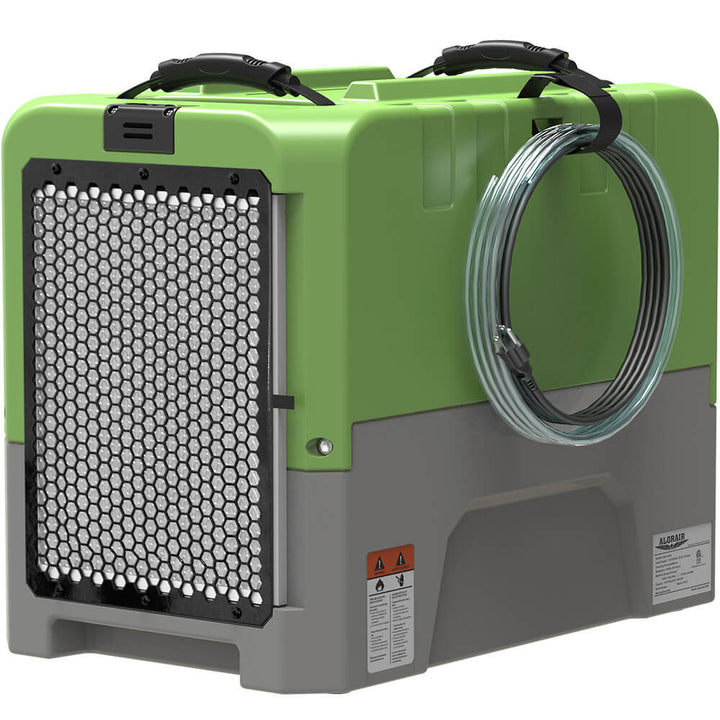
Mercury Corsair 0.5 HP 3-Speed Air Mover 90-2000
$329.95
Rated at 1,060, 1,360 and 1,500 CFM across its three speeds.
Before you start: what to check
Read the carpet or rug label first, because it tells you the fiber blend and any maker cleaning code. WoolSafe's guide says products with the WoolSafe Approved Mark are safe and effective on wool and advanced generation nylon fibers. If the label lists any other fiber, follow that carpet maker's cleaning code before you wet anything, or leave it to a specialist. Clear the furniture, mask the legs of anything that stays and keep foot traffic off until the carpet is fully dry. Plan where the air mover goes before you wet anything: that plan, more than the machine, decides whether the job comes out clean.
Step 1: Vacuum thoroughly while it is dry
WoolSafe's guide splits soil into coarse dry soil such as sand (only vacuuming removes it) and fine oily soil (it needs a chemical clean). WoolSafe describes routine care as daily vacuuming of regularly trafficked areas plus spot removal. Go slowly, overlap your passes and do the room in two directions. On long-pile or coarse loop-pile wool, use plain suction with the beater off: the guide says brushes and beaters should be avoided on those carpets.
Step 2: Test for colorfastness and the cleaner
Follow the chemical maker's test instructions. WoolSafe's guide says to test every product that way first, so neither the chemical nor the method causes damage. Pick a hidden spot, such as inside a closet. A common check is to apply the mixed pre-spray to that spot, leave it for the same 10 to 15 minutes you plan to dwell, then blot firmly with a white towel and look for dye on the towel. Check the carpet for color change too. If either shows dye, stop. Try a different WoolSafe Approved product on a fresh spot, or call a WoolSafe Approved Service Provider.
Step 3: Choose and pre-spray a wool-safe solution
WoolSafe's guide says that on wool and wool-rich carpet only WoolSafe Approved chemicals should be used. It asks for low alkalinity and a non-sticky residue, because high alkalinity can cause color bleeding in dyed yarns, jute staining of the pile surface in light-colored carpets and, in extreme cases, yellowing and weakening of wool fibers. Read the product label for the WoolSafe Approved mark rather than reaching for household soap. Mix it as the label says. None of the machines on this page carries a WoolSafe mark; the mark to look for is on the chemical.
WoolSafe's guide sets out the wet-cleaning order as vacuuming, a pre-spray of the detergent, a 10 to 15 minute dwell, a rinse with a spray extractor, grooming, drying and a final vacuum. Pre-spray the detergent with a pump sprayer, let it dwell 10 to 15 minutes and do not let it dry on the pile. Fill the extractor's solution tank with clean water or a WoolSafe Approved rinse, not the detergent. Sandia's manual for the Sniper also recommends pre-spraying a carpet detergent and extracting with clean water from the solution tank.
Step 4: Set the machine low
Drop the pressure first. Sandia's manual lists a 500 PSI regulator and a pressure gauge on the Sniper, so you can set the pressure low and read it. A 55 PSI spotter such as the Mytee S-300 is already gentle. Keep heat moderate. A machine with a heater you can switch off lets you start cold and add warmth only if the soil needs it.
“little heavy if needing to be lifted a lot, but amazing product. Heats up very fast, was very impressed with the quality of cleaning.”
Sandia Sniper 12-Gallon Carpet Extractor owner · 5 out of 5 stars
Sandia's manual lists a separate heater switch on the heated 80-2500-H, so it can run cold. The listing gives a 137 lb shipping weight (141 lb heated) and the machine stands 38 in tall, so it suits a contractor's van more than a one-off job at home. The S-300 has no heater, and its listing notes you can fill it with warm tap water. Spray the wand into a bucket for a few seconds to clear air from the line, then test the spray on the hidden spot too.

Step 5: Rinse with light passes, then dry passes
Pull the wand slowly toward you, spraying the clean rinse on one pass, then go over the same strip with the trigger off to lift water. Add two or three dry passes per strip. WoolSafe warns that over-wetting greatly lengthens drying time, and its guide says over-wetting can discolor the pile. Water lift is what saves you here: the EDIC Galaxy 5 is listed at 136 in and the Powr-Flite PFX1080 at 150 in.

Step 6: Groom the pile and dry fast
Comb or brush the pile in one direction while it is damp so it dries upright. Then move air across the floor. The Mercury Corsair is rated at 1,060 CFM on its low speed, 1,360 CFM on medium and 1,500 CFM on high. Run it on high, aimed low across the damp pile, and turn the room's air conditioning on in humid weather so the air stays dry as well as moving. Check the pile and the backing by hand until both feel fully dry. Our guide to drying wet carpet covers placement in more detail.

For airflow tools beyond this one, see our air movers.
Settings at a glance
| Step | Setting for wool | Why |
|---|---|---|
| Vacuum | Suction, no hard beater on coarse loop or long pile | Removes dry soil before water touches it |
| Test | White towel on a hidden spot after the full dwell | Shows dye bleed before you commit |
| Pre-spray | WoolSafe Approved, mixed to the label, 10 to 15 minute dwell | WoolSafe links high alkalinity to color bleed, jute staining and, in extreme cases, yellowing |
| Rinse | Clean water or WoolSafe Approved rinse in the tank | Removes sticky residue that resoils |
| Pressure | Turned down | Less water pushed into the pile and backing |
| Heat | Moderate or none | Gentler on the fiber; start cold and add if needed |
| Passes | Light wet pass, then two or three dry passes | Over-wetting lengthens drying and can discolor |
| Drying | Air mover on high, pile groomed | Short drying time is the main protection against browning |
Wall-to-wall wool versus area rugs
Wall-to-wall wool is held flat on its tack strip and you can dry the whole room, but check the backing first. Many woven wool carpets are built on a jute or cotton backing, and WoolSafe's guide links high-alkaline chemicals to jute staining of the pile surface in light-colored carpets: the browning owners fear. A jute or cotton backed carpet needs the same light-moisture care as a rug, and the pad should never get soaked.
An area rug is different. Rugs can have cotton foundations, and a rug soaked on the floor can shrink or brown as it dries slowly. Work a valuable or antique rug lightly, or take it to an off-site rug wash that can rinse it and dry it flat. A small, inexpensive wool rug can be done at home with a spotter like the Mytee S-300 at $859. Its solution and recovery tanks hold 1 gallon each, so anything bigger than a small rug means many stops to empty and refill.
“You can tell this is well made. Small but extracts great and leaves upholstery and carpet dry. Love the clear nozzle and accurate spray, no mess.”
Mytee S-300 Tempo Upholstery Spotter owner · 5 out of 5 stars
That owner was cleaning upholstery and carpet, not wool, but leaving the pile nearly dry is exactly what a wool rug needs.
Dry a rug off the floor, on blocks or a rack, so moisture cannot sit in its foundation or mark the floor underneath.
Spots, stains and pet urine on wool
WoolSafe's guide says to scoop up solids and blot up liquids first and avoid rubbing. Put the spotter on a clean white towel, not on the stain, use small amounts, work from the edge of the stain toward the center, rinse with a little clean water without over-wetting and blot as dry as you can. The spot remover should carry the WoolSafe Approved Mark. The guide notes that old urine stains may need a professional cleaner. A spotter such as the Mytee S-300 does the rinse-and-extract step with very little water.
After the job
Vacuum once more when the carpet is completely dry to lift the pile. Keep a record of the solution, the settings and the dye-test result for next time. Regular dry vacuuming between cleans does most of the long-term work, so the wet job can stay occasional.
How often: WoolSafe's guide suggests a restorative wet clean every 18 to 24 months for lightly soiled carpet, 12 to 18 months for medium, 6 to 12 months for heavy and 3 to 6 months for very heavy soiling, with low-moisture interim cleans in between.
Common mistakes
- Soaking the carpet. WoolSafe's guide says over-wetting lengthens drying and can discolor the pile.
- Skipping the dye test.
- Using any cleaner, including household soap, instead of a WoolSafe Approved one.
- Putting the detergent in the extractor tank instead of pre-spraying it and rinsing with clean water.
- Running full pressure and full heat because the machine allows it.
- Scrubbing with a hard brush on coarse loop or long pile.
- Leaving the room closed with no airflow.
If you want no heater in the machine at all, the Powr-Flite PFX1080 is $2,000 and the EDIC Galaxy 5, which lists no heater, is $1,878. Compare methods in hot water extraction versus low-moisture cleaning.

Frequently asked questions
How do I clean a 100% wool rug?
Vacuum it dry on both sides, test the dye, then work a wool-safe solution in lightly and extract with low pressure. Dry it flat and off the floor. If it is valuable, send it to an off-site rug wash.
Can a wool carpet be cleaned?
Yes. WoolSafe's guidance says there are no hard and fast rules on which method is best, and that the choice depends on the carpet and the soil. Its restorative method is a thorough vacuum, a pre-spray of a WoolSafe Approved detergent with a 10 to 15 minute dwell, a rinse with a spray extractor, grooming the pile, drying and a final vacuum.
Are wool carpets easy to clean?
Day to day, yes, if you keep vacuuming: WoolSafe's guide says vacuuming removes the coarse dry soil, and most of the visible dirt is fine oily soil that a periodic clean lifts. The wet clean is where wool needs care. The guide says damage in wet cleaning usually comes from over-wetting, too much mechanical action and unsuitable chemicals.
What carpet cleaner is best for wool?
Choose a WoolSafe Approved chemical, and a machine with adjustable pressure, heat you can switch off and strong water lift. Our upholstery cleaning machine guide covers smaller units too.
Can you use Dawn dish soap on wool carpet?
We would not. WoolSafe's guide asks for low alkalinity and a non-sticky residue in any chemical used on wool, because sticky residue makes carpet resoil faster, and it says only WoolSafe Approved chemicals should be used on wool and wool-rich carpet. A dish soap is not made or approved for that, so use a WoolSafe Approved spotter instead.
Should I take a wool rug to the dry cleaners?
Ask first. Rug "dry cleaning" usually means low-moisture cleaning (an absorbent compound or encapsulation product brushed in and vacuumed out), not the solvent process used on clothes. For a valuable rug, a specialist rug wash that rinses it thoroughly and dries it flat is the safer choice; ask how they rinse and dry it. For lighter cleaning between wet cleans, WoolSafe's guide lists low-moisture methods (spray or mist systems, absorbent compound and dry foam or encapsulation) and says a wool carpet cleaned that way can be dry within an hour.
Pick an extractor you can turn down for wool
Related guides
- How Long Does Carpet Take to Dry After Cleaning? (And How to Dry It Faster)
- How to Use a Carpet Cleaning Machine: The Pro Extraction Steps, Passes and Settings
- How to Remove Carpet Stains Like a Pro: Spotting Chart and Extraction Steps
- Hot Water Extraction vs Encapsulation and Low Moisture Cleaning: Which to Use When