How we made this guide: picks, prices and specs come from our catalog and the makers' published specs, owner quotes come from customer reviews on our product pages and the guide was drafted with AI help, then checked and edited by Trevor Hall.
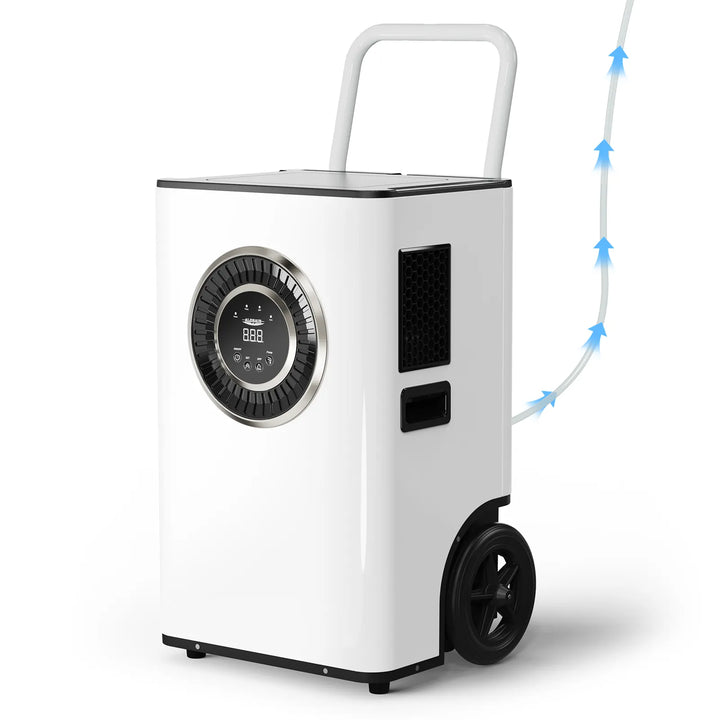
In a humid summer, closed or sealed crawl space vents are usually the safer choice, because open vents let in air that can condense on cooler surfaces. The usual alternative is to seal the vents and dry the space with a dehumidifier such as the XPOWER Viking BD-90P at $1,341. Local code decides what is allowed on your house.
Quick answer
Check the dew point before you decide. If the outdoor dew point is above the temperature of your joists, ducts and ground cover, outdoor air will condense on them when it comes in through a vent. In that case, sealing and drying the space beats venting it. See our crawl space dehumidifiers, or a powered crawl space ventilation fan where that suits the space better.
Why the dew point decides open or closed
Air holds water vapor, and the dew point is the temperature at which that vapor starts to condense on a surface. If a surface is colder than the air's dew point, it gets wet. A crawl space is often cooler than the summer air outside, because the ground keeps it cool. When a vent opens that cool space to warm, humid air, the surfaces can end up below the dew point.
The check takes two readings: the outdoor dew point (from a weather report or from temperature and humidity) and the surface temperature of the joists, ducts or ground cover. A hygro-thermometer with an infrared thermometer, like the Extech RH101 at $217.79, gives you both readings in one handheld. The RH101 is rated for infrared readings from -58 to 932°F with an 8:1 distance to spot ratio, and it also measures humidity and air temperature. It does not calculate the dew point, so pair it with a weather report or the method below.

For the dew point check
Extech RH101 Hygro-Thermometer & Infrared Thermometer, -58 to 932°F, 8:1, Humidity Air Temp
$217.79
Reads humidity and air temperature, plus an infrared surface reading for joists and ground cover.
A worked example, with numbers
This is our calculation, using the Magnus dew point approximation. It is a method for estimating the dew point from temperature and relative humidity, so treat the results as close estimates, not lab values.
How we worked it out
Our calculation uses the Magnus approximation, with temperature T in °C: g = ln(RH / 100) + 17.62 x T / (243.12 + T), then dew point = 243.12 x g / (17.62 - g). Example: 85°F (29.4°C) at 70% RH gives g of about 1.55 and a dew point of about 23.4°C, which is about 74°F.
| Outdoor air | Outdoor dew point (our calculation) | Crawl space surface | What happens |
|---|---|---|---|
| 85°F, 70% RH | about 74°F | 68°F | Surface is below the dew point, so water can condense |
| 90°F, 50% RH | about 69°F | 68°F | Surface is about 1°F below the dew point, so water can condense; the margin is within the method's error, so treat it as at risk |
| 85°F, 70% RH | about 74°F | 78°F | Surface is above the dew point, so no condensation on that surface |
The pattern is the point. The same warm afternoon can leave one surface wet and another merely damp, depending on how cool your surfaces are. Even in the third row, the air touching a 78°F joist sits near 88% relative humidity (our calculation), damp enough for wood to take on moisture over a humid season. Dry outdoor air, as in a desert climate, leaves a wide gap between the dew point and the surfaces, and venting is less of a problem there.
Open or closed: summer and winter
Summer: in a humid climate, closing the vents keeps the humid air out. In hot, humid regions a sealed crawl space keeps the damp air out; in dry regions vents do less harm. Closing the vents alone does not dry the space, though. Water still enters through the soil and the walls, which is why a sealed space also needs a ground cover and a way to remove moisture.
Winter: the concern is cold air reaching pipes and the floor above. Closing or covering vents in a freeze keeps cold air off the plumbing. Winter air is usually dry, so the risk then is freezing, not condensation. Closed vents are not freeze protection on their own, so check that the pipes in the space are insulated before a hard freeze.
Spring and fall sit in between. Cooler nights and warm, damp days can swing the dew point past your surface temperature within a single day, so a reading taken at the same time on a few different days tells you more than one visit. Write down the outdoor temperature and humidity next to each surface reading, and you will see which weather patterns put your space at risk.
Automatic vents that open and close with temperature are a partial answer at best. They respond to temperature, not to the dew point, so they can still open on a warm, wet afternoon. If you keep vents, treat them as one part of the plan and still measure the space.
What the building code says
The International Residential Code (IRC) covers under-floor spaces in section R408. Local governments adopt their own edition and often amend it, so the rule on your house may differ from the model code. This is not legal advice, so confirm with your local building department.
- A traditional vented crawl space is covered by R408.1. It calls for at least 1 sq ft of net vent area for every 150 sq ft of crawl space floor, or 1 sq ft per 1,500 sq ft when the ground is covered with a Class I vapor retarder, with one vent within 3 ft of each corner of the building. A 1,500 sq ft crawl space with bare earth therefore needs 10 sq ft of net vent area (our calculation: 1,500 / 150). Your local code edition and building department have the final word.
- R408.3 allows an unvented crawl space if the exposed earth is covered with a continuous Class I vapor retarder, with seams overlapped 6 in and sealed or taped, and edges run at least 6 in up the stem wall and sealed to it. Some states rewrite this section: South Carolina, for one, calls for a different retarder class and sizes the dehumidifier to the maker's specifications.
- An unvented space also needs one of the listed moisture options. Two of them, continuous mechanical exhaust and a conditioned air supply, are sized at 1 cfm per 50 sq ft of crawl space floor and also call for an air pathway to the house and insulated perimeter walls. The dehumidifier option has changed between editions: the 2018 IRC sized it at 70 pints (33 liters) of moisture removal per day for every 1,000 sq ft of floor and named no test condition, while the 2024 IRC sizes it to the dehumidifier maker's specifications. Ask your building department which edition and wording your area uses.
Under the 2018 IRC figure, a 1,500 sq ft crawl space needs 105 pints per day of rated capacity (our calculation: 1,500 / 1,000 x 70). The code names no AHAM or saturation condition, so ask your inspector which rating they accept. By the same math, the CS90's 70 pints covers 1,000 sq ft and the BD-90P's 85 pints at AHAM covers about 1,200 sq ft (our calculation: 85 / 70 x 1,000). Both figures are smaller than the 1,500 sq ft room size listed for the CS90 and the 2,600 sq ft XPOWER lists for the BD-90P. For help with sizing in general, see our dehumidifier sizing chart.
How to seal crawl space vents
Sealing vents is the easy part. The rest of the crawl space needs work too, or you are just trapping the moisture.
- Fix leaks and standing water before anything else. Gutters and grading that send water toward the house will beat any seal.
- Cover the ground with a continuous vapor retarder and seal the seams. See our crawl space encapsulation guide for the full job.
- Block each vent from the inside or the outside with rigid foam board cut to fit, sealed at the edges with foam sealant or tape. Rigid foam also adds insulation value.
- Add a way to remove moisture, which means a dehumidifier or another option your code lists.
- Keep a humidity reading in the space and check it through the season.
Leave any vent alone that serves a gas appliance or a combustion air supply, and ask a licensed pro before you block it.
Dehumidifiers instead of vents
Once the vents are sealed, the space needs a way to shed moisture. A dehumidifier does that without opening the space to the weather. See our full range of crawl space dehumidifiers, or ductable dehumidifiers if you want to move dry air to another area. For setup, see crawl space dehumidifier installation, and for the electricity side see what a dehumidifier costs to run.
| Dehumidifier | Price | Capacity | Power | Drain |
|---|---|---|---|---|
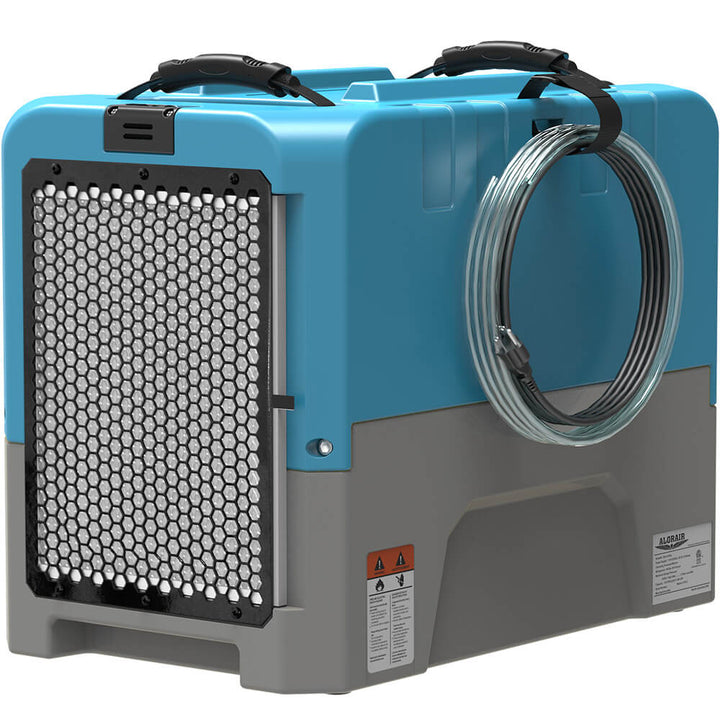
| Ebac CS90 Series | from $2,254 | 70 pints per day (no test condition given) | 880 W max, 7 A, 25 ft cord | Internal condensate pump, 25.6 ft drain hose |
| XPOWER Viking BD-90P | $1,341 | 85 pints at AHAM, 195 at saturation | 720 W, 18 ft cord | Gravity drain or built-in pump, 20 ft hose |
Do not compare the two capacity figures directly. AHAM and saturation ratings use different test conditions, and Ebac gives no test condition for the CS90's 70 pints.

Industrial unit with a pump
Ebac CS90 Series Industrial Dehumidifier
From $2,254
Internal condensate pump, a 25.6 ft drain hose and a 33°F to 95°F operating range in Ebac's manual.

Pump or gravity drain
XPOWER VIKING Commercial Grade Dehumidifier for Crawlspace, Basement, Attic, Garage BD-90P
$1,341
XPOWER lists coverage up to 2,600 sq ft, a built-in pump or gravity drain and ductable outlets.
The BD-90P weighs 69.2 lb and the CS90 weighs 83.7 lb, so plan how you will get either one through the crawl space access. Both list a drain hose: on gravity drain keep it sloped downhill to a floor drain or sump, and on pump drain the pump can push the water up and out of the crawl space. Set the humidistat (the CS90 lists one) or the BD-90P's controls to the humidity target your inspector or contractor gives you, and check it against a reading from your own hygrometer.


After you seal the vents, keep checking. Read the humidity and surface temperatures through the first humid month, look at the ground cover for pooled water, and listen for the pump cycling. If the space still feels damp, the cause is usually liquid water or a gap in the cover, not the machine. Our dehumidifier maintenance guide covers the filter and drain line you will need to clean each season.
Powered vent fans
A powered ventilation fan moves air through the space by force, which is a different approach from a passive vent or a dehumidifier. We carry crawl space ventilation fans for spaces where that is the right fit. Run the dew point check first: pulling humid outdoor air through the space with a fan still raises the same condensation question. In a sealed crawl space, the code's exhaust option uses a fan running continuously at 1 cfm per 50 sq ft of floor, with an air pathway from the house, so a 1,500 sq ft space needs 30 cfm (our calculation: 1,500 / 50). That draws house air through the space instead of outdoor air.
Frequently asked questions
Should you vent a crawl space?
It depends on your climate and your local code. In hot, humid regions, sealing the space and drying it is usually favored. In dry regions a vented space can work fine. Check the dew point against your surface temperatures, and confirm what your local code requires.
What do you block crawl space vents with?
Rigid foam board cut to fit is the common choice, sealed at the edges with foam sealant or tape. Pre-made vent covers also exist. Whatever you use, seal the gaps. Leave any combustion air vent to a licensed pro.
What can I put in my crawl space to absorb moisture?
Desiccant packs absorb small amounts of moisture, but they fill up and need replacing, so they suit a closet more than a whole crawl space. A dehumidifier removes moisture continuously and drains it away. For a full crawl space, a dehumidifier is the usual tool.
Do crawl spaces attract mice?
Any gap that lets in air can also let in animals, so a sealed vent with a solid cover and a closed access door gives them fewer ways in. For pest problems, call a pest control pro.
What happens if a crawl space is not vented?
With no vents, no ground cover and no way to remove moisture, damp air from the soil builds up in the space. The IRC's unvented option works because it pairs closed vents with a sealed Class I vapor retarder and one of the listed moisture options. Closing vents without those just traps the moisture.
Does mold grow under a crawl space vapor barrier?
It can when water gets under the cover, from poor drainage, a leak or open seams. Fix the water source, overlap and seal the seams and check under the cover after heavy rain. For cleanup, see crawl space mold remediation.
Should I cover crawl space vents in winter?
Covering them in a freeze keeps cold air off the pipes. Insulate the pipes too, and check your local guidance.
Ready to dry the space? Our guide to crawl space mold remediation covers cleanup, and how a dehumidifier works explains the machine itself.
Dry the crawl space instead of venting it