How we made this guide: picks, prices and specs come from our catalog and the makers' published specs, owner quotes come from customer reviews on our product pages and the guide was drafted with AI help, then checked and edited by Trevor Hall.
To get mold out of car carpet, find and fix the water source first, then put on protection, HEPA vacuum the dry growth, clean the fibers with a detergent solution and a heated extractor, then dry the car fast. A small patch on cloth carpet or seats takes about a day including drying and is moderate work: the cleaning is easy, the drying and the leak are what people get wrong.
The tool list below runs from the auto detailing extractors that do the cleaning to the HEPA vacuums, air movers and dehumidifiers that make it stay clean. If you already know you need an extractor, our picks are in the best extractors for car detailing.
Quick answer
Fix the leak. Wear a respirator, gloves and goggles. HEPA vacuum first, then clean with detergent and a heated extractor. Dry in a closed bay with an air mover and a dehumidifier. Padding that stays wet or smells after cleaning gets replaced. Large areas, flood cars and sewage water go to a remediation professional.
What to know before you start
Mold needs moisture, so the leak matters more than the cleaner. The EPA's guide to mold and moisture puts it plainly: the key to mold control is moisture control. It asks for wet areas and items to be dried inside 24 to 48 hours.
This guide covers cloth carpet and cloth seats. The goal is to remove visible growth from the surfaces and dry the car so it does not come back. EPA's mold guide says dead mold may still cause allergic reactions in some people, so the growth has to be physically removed, not just treated. The same guide says absorbent or porous materials, such as ceiling tiles and carpet, may have to be thrown away if they become moldy. In a car, think of the foam and padding under the carpet the same way.
Is it mold, salt or dirt?
Mold grows as fuzzy or powdery spots, often white, green or black. It comes with a musty smell. White, crusty tide lines on the carpet after winter are usually road salt, which dissolves in warm water and has no musty smell. If you are not sure, treat it as mold and follow the steps below.
When to stop and call a professional
- The car sat in flood water or sewage. Floodwater is contaminated, and the carpet and padding usually need professional assessment.
- The growth covers a large part of the interior. The EPA's guide says most people can handle an area under about 10 square feet themselves.
- You have health concerns. EPA's guide says to consult a health professional before starting cleanup.
Tools and equipment
| Job | Tool | Spec that matters |
|---|---|---|
| Protection | N-95 respirator, gloves, goggles | The EPA's list for mold cleanup |
| Dry growth removal | HEPA backpack vacuum | Mosquito Carbon-Lite: 152 CFM, 101 in static lift, Quad HEPA |
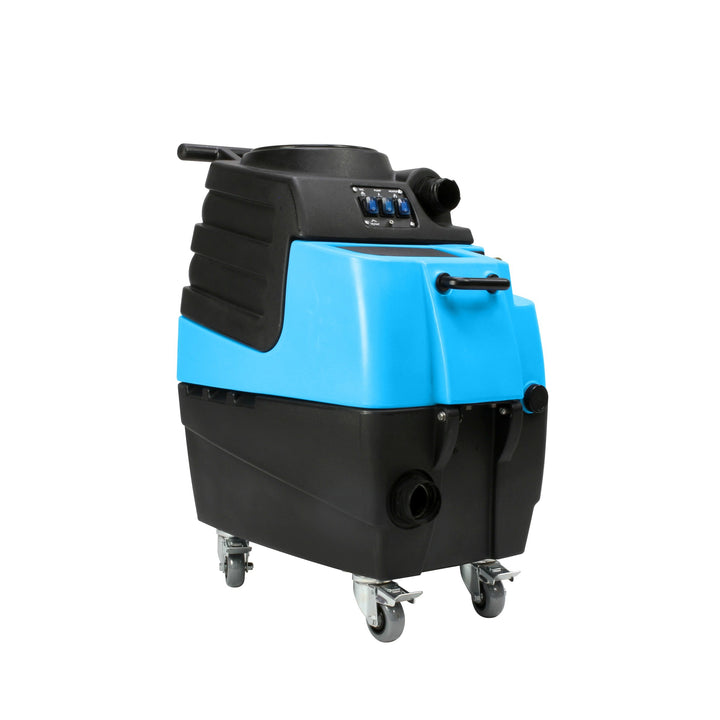
| Cleaning the fibers | Heated detail extractor | Mytee HP120: 120 PSI, 1,200 W heater, 210F maximum |
| Fast drying | Air mover | XPOWER X-600A: rated 2,400 CFM, 3.8 A |
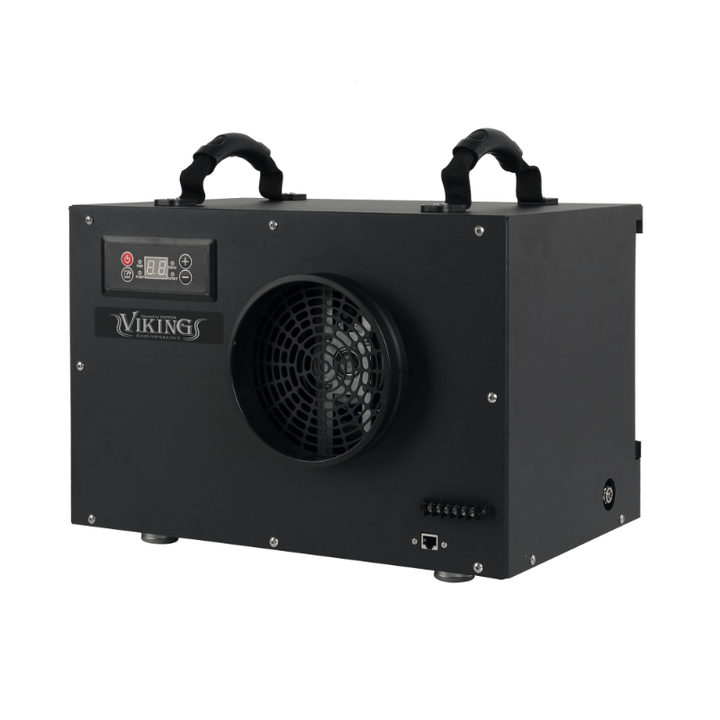
| Humidity control | Compact dehumidifier | Ebac RM40: 24 pints a day, 340 W, 47 dB |

HEPA vacuum
Mosquito Carbon-Lite HEPA Backpack Vacuum
$605
A backpack unit reaches seat seams and carpet edges. The listing shows 152 CFM and 101 in of static lift.

Extractor
Mytee HP120 Grand Prix Automotive Heated Detail Extractor, 120 PSI, 10 gal
$2,258
A single-cord, 10 gallon heated extractor built for detail bays and mobile detailing.
Step 1: Find and fix the water source
Before you clean anything, work out where the water came from. Check the door and window seals, the windshield and rear glass seals, the sunroof and cowl drains, the AC condensate drain, the tail light and trunk seals and any recent repair that opened the cabin. A wet passenger footwell with a sweet smell or fogged glass can point to a leaking heater core, which is a mechanic's job before any cleaning. A service manual for your model shows where the drains sit.
Press the carpet at the lowest point of the floor and under the seats. Damp spots show where water collects, but padding holds water long after a leak stops, so dry it and recheck after rain or a hose test to know whether the leak is still active.
If the musty smell comes from the vents, replace the cabin air filter and have the AC drain checked before you run the fan. EPA's guide says not to run an HVAC system you know or suspect is contaminated with mold, and the same logic applies to a car's blower.
Step 2: Protect yourself and set up
The EPA's guide lists gloves, goggles and an N-95 respirator for mold cleanup and tells you to avoid breathing in mold or its spores. Work with the doors open, in a garage or bay, not in a closed living space. Bag the floor mats and loose items, and do not shake them out indoors.
Step 3: HEPA vacuum the dry growth
Vacuum before you wet anything. Wetting dry growth first can push it into the fibers. Go over the carpet, the seat seams, the door panels and the trunk floor with a HEPA vacuum. The Mosquito Carbon-Lite listing shows Quad HEPA filtration, 152 CFM of airflow and 101 in of static lift at 11.4 A. It gives no filter efficiency figure, so for mold work check the filter rating and that the housing seals around the filter. Empty it outside, into a sealed bag.
If you want to know what a HEPA rating means before you buy, see what is a HEPA filter.
Step 4: Clean the fibers with a detergent solution and extract
For hard surfaces EPA says scrub with detergent and water, then dry completely. For cloth, the same idea works with an extractor: mix an upholstery and carpet extraction detergent to the label, test it on a hidden spot for color change, then spray, agitate lightly and extract in slow overlapping passes until the water coming back is clear.
- Work in sections, one seat or one footwell at a time.
- Run the extractor with the hose tool, not a heavy hand. Soaking the padding is how mold comes back.
- Make a second dry pass, with the spray off, to pull out as much water as the vacuum will lift.
- Wipe hard plastic and vinyl trim with detergent and water, then dry it.
The Mytee HP120 Grand Prix lists a 120 PSI pump, a 1,200 watt heater with a 210F maximum, 130 in of water lift and 10 gallon solution and recovery tanks. Pump, vacuum and heater run from one 25 ft cord that draws 20 A at 115 V, so plan a 20 A circuit. It is one of our best-selling detail extractors. Mytee's spec sheet lists detailing cars, boats, planes, couches and chairs among its uses, plus small rooms with the optional 10 in carpet wand (model 8390-EZ).

Pros and cons: Mytee HP120
Pros
- Heater, pump and vacuum on one cord
- 10 gallon tanks for several interiors per fill
- Loading wheels for one-person van loading
Cons
- 109 lb before any water goes in, so steps and high van floors are hard work even with the loading wheels
- Needs a 20 A circuit
- Overbuilt for a one-off job on a single car
Skip it if you only have one small car to do: a smaller spotter or a rental may suit you better. For lighter machines see the best upholstery cleaning machines.
For pass technique and settings, how to use a carpet cleaning machine walks through the passes.
Cloth seats versus leather seats
Cloth seats take the same method as the carpet, with less water: more passes, less spray. Many front seats hold heater elements and sensor wiring, so keep the foam from getting soaked and check the owner's manual for seat cleaning cautions. For the full seat routine, see how to clean car upholstery.
Leather is different. Do not use hot water extraction or steam on leather unless the car maker or the leather supplier says it is safe. Follow their care instructions, and ask them which cleaner they allow on leather that shows growth. If the leather is cracked or the stitching is damp underneath, the foam below may need replacing.
Step 5: Dry the car fast
This is the step that decides whether the smell and the mold come back. Close the garage or bay and open the car doors. Fold the seats forward or take them out, lift the carpet edges where the trim lets go and run an air mover across the floor. The XPOWER X-600A is rated at 2,400 CFM, draws 3.8 A on a 25 ft cord and has built-in GFCI outlets. Rated airflow is the maker's figure, so point the air at the footwells and under the seats by hand.

Air mover
From $230
Weighs 21.5 lb and stacks up to four high, so it moves between jobs easily.

Add a dehumidifier in the same closed space so the water leaving the carpet goes out of the room instead of into the air. The Ebac RM40 lists 24 pints a day (our listing gives no test condition, so do not compare it with AHAM ratings), 340 W, 47 dB and an operating range of 33F to 95F. Its room size recommendation is 208 sq ft, about 13 by 16 ft, so it suits a small closed bay. Measure yours first: a bigger garage needs a bigger unit.

Dehumidifier
Ebac RM40 Series Compact Dehumidifier
$1,400
A compact unit with a 208 sq ft room recommendation. The RM40P adds a condensate pump.

For a faster approach to drying carpet, see how to dry wet carpet and how long carpet takes to dry. For sizing, what size dehumidifier you need.
Step 6: Check dryness before the car goes back
Do not judge by touch alone. Press a paper towel into the thickest part of the carpet and under the padding: any dampness means keep drying. For indoor air, EPA suggests staying under 60 percent relative humidity, with 30 to 50 percent as the ideal. We borrow that as the target for a closed bay. A basic hygrometer in the closed bay shows when the air has reached that range. Then shut the hygrometer inside the car for a few hours: if the cabin reading climbs well above the bay's, something inside is still wet. A pin moisture meter on the padding, compared with the same material in a dry part of the car, gives a firmer answer. Check the car again after a day.
When the padding or carpet has to go
If the padding stays wet, still smells after cleaning and drying or the growth returns within days, the source is deeper than the surface. That is the point where the EPA's advice on throwing away carpet applies. Cutting out the carpet and replacing the padding is the fix, and a trim shop or remediation professional can do it.
Notes by job size
A damp footwell on one side of a daily driver is a one-person job with a vacuum, a spotter or detail extractor and one fan: a few hours of work, then the drying. A whole interior with musty seats, a stored classic or a trunk that sat wet for weeks takes longer and needs the seats out so the padding can dry from both sides. That is where a closed bay with a dehumidifier earns its place. Detail shops that do this often get the most from a 10 gallon heated machine, which holds enough for several interiors per fill.

Mobile detailers can run the same kit from a van if they have the power. The HP120 wants a 20 A circuit on its own, so check the outlet before you unload. The air mover draws 3.8 A, and the RM40's 340 W is about 3 A at 115 V (our calculation: 340 W / 115 V). Together that is about 7 A, so run them on a different circuit from the HP120, which needs its 20 A circuit to itself.
Common mistakes
- Cleaning before the leak is fixed.
- Vacuuming dry growth with a household vacuum that has no HEPA filter, which blows it back into the cabin.
- Using a biocide as a shortcut. The EPA's guide does not recommend a biocide as a routine part of mold cleanup.
- Running the fan on a musty system before the cabin air filter is changed.
- Skipping the dryness check.
Frequently asked questions
Can mold come out of car carpet?
Often, yes, when the growth is on the surface and the padding underneath is not soaked. HEPA vacuum, clean with detergent and an extractor, then dry within 24 to 48 hours. If the padding stays wet or smelly, it needs replacing.
What gets mold out of a car?
Removal is the goal, not a chemical treatment. EPA's mold guide says dead mold may still cause allergic reactions in some people, so the growth has to be removed. HEPA vacuum, clean with detergent and water, extract the cloth, dry the car and skip routine biocides, which EPA does not recommend as a routine practice.
Can I use Lysol on my car interior?
Follow the product label and your car maker's guidance for each surface. For mold, EPA's guide does not recommend a biocide as a routine practice: cleaning with detergent and water and drying come first.
Will vinegar work on mold in car carpet?
The EPA guide names detergent and water, not vinegar. Vinegar also adds moisture and a smell to a car that needs to be dry. We recommend the extractor method above.
How do you clean mold off leather car seats?
Follow the car maker's or leather supplier's care instructions, and do not use hot extraction or steam unless they say you can. Cracked leather or damp foam underneath is a job for a trim shop.
How do I stop it coming back?
Fix the leak, keep floor mats dry and run a dehumidifier in the garage after wet weather. For a bigger picture on drying spaces, see basement mold remediation.
Get the car clean and dry