
How we made this guide: picks, prices and specs come from our catalog and the makers' published specs, owner quotes come from customer reviews on our product pages and every guide is checked and edited by Trevor Hall.
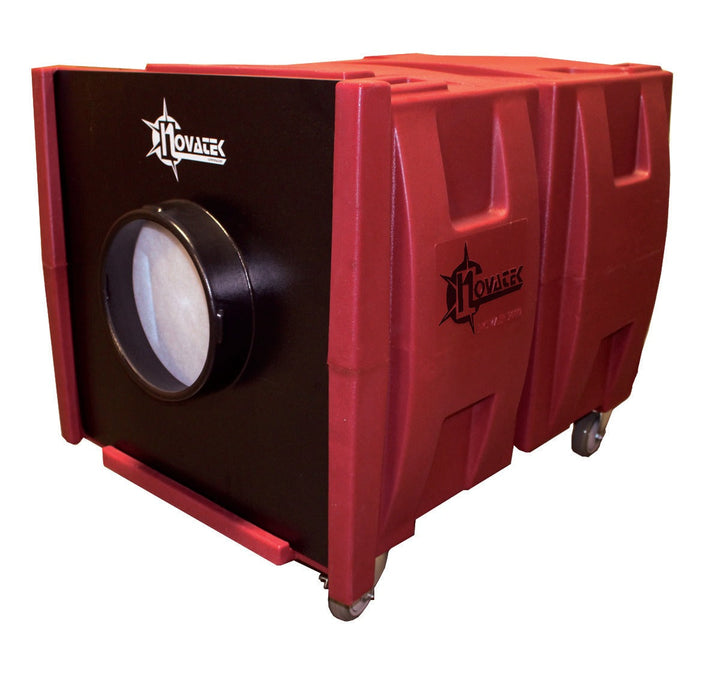
An air scrubber and a negative air machine are usually the same HEPA box: run it inside the room and it filters that room's air, duct its exhaust out of the work area and it holds that area at lower pressure than the rest of the building. If you want one unit that does both, the Abatement PREDATOR PRED1200 at $2,230 has 10 inch collars for ducting and is the best-selling machine in this comparison. For less, the Novatek Novair 700 at $1,225 does the same two jobs at 200 to 700 CFM on 3 amps, and Novatek's manual says up to three units can be connected to create negative pressure.
Quick answer
Pick air scrubber mode when the goal is cleaner air in the room you are working in. Pick negative air mode when dust has to stay inside a sealed work area. Ducting is the extra cost: Novatek Duct-2-Go starts at $212.75. Browse negative air machines or air scrubbers.
Side by side: what each setup does
| Question | Air scrubber (recirculating) | Negative air machine (ducted) |
|---|---|---|
| What it does | Pulls room air through pre-filters and a HEPA filter and returns it to the room | Pulls work area air through the same filters and exhausts it outside the work area |
| Where the exhaust goes | Back into the same room | Through duct to another space or outdoors, as the job plan says |
| Ducting | None needed | Duct on the exhaust, sometimes on the intake too |
| Room pressure | Stays about the same | Falls below the surrounding space |
| Containment | Not required | Needs a sealed or barriered work area |
| Monitoring | Filter gauge or change light | Filter gauge plus a room pressure monitor |
| Typical jobs | Dust, smoke and sanding debris in an open room | Mold remediation containments, asbestos enclosures and hospital renovation zones (ICRA) |
| Mode in the maker's manual | Recirculation: filtered air is exhausted back into the same room | Negative pressure: filtered air is exhausted out of the contained area |
| Airflow rule | Sized by air changes per hour | Exhaust the greater of 10% or 100 CFM more air than enters the area (Abatement PRED750 manual) |
| Where the machine sits | Anywhere in the room with the intake clear | Inside the containment with duct on the exhaust, or outside it with duct on the intake |
What they share
Both setups use the same machine. Take the Abatement HEPA-AIRE H2KMA: it lists a polypad pre-filter, a 2 inch pleated pre-filter and a 6 inch HEPA filter at 99.97% and 0.3 microns. The PRED1200 lists the same 99.97% at 0.3 microns, with a 1 inch coarse filter and a 2 inch pleated filter ahead of it.
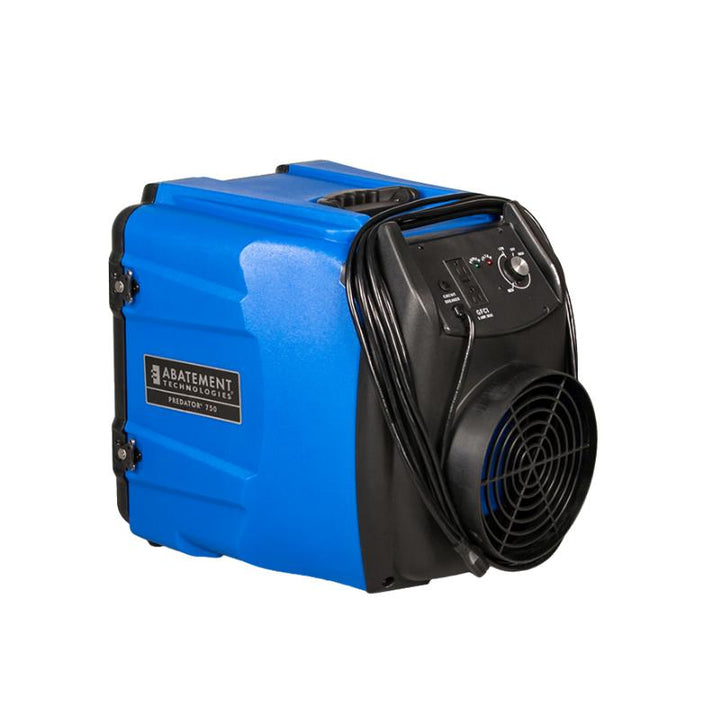
Abatement's PRED750 manual, written for the same PREDATOR series, says the units are "primarily used in a negative pressure or recirculation mode". That one sentence is the whole answer: the hardware is the same and the setup changes the job.

Does both
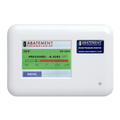
Abatement Technologies PREDATOR Series Portable Air Scrubber PRED1200
$2,230
Variable speed up to 900 CFM, 3.5 amps and 10 inch inlet and outlet collars make it easy to run recirculating or ducted.
Difference 1: where the exhaust goes
This is the only difference that matters for pressure. The PRED750 manual explains that a negative pressure condition exists when the static pressure inside the room is lower than the environment outside it, and that it is created and maintained by continuously exhausting air out of the room faster than air enters from all other sources. In recirculation mode the filtered air stays in the room, so the pressure does not move. The manual also lists a third mode, positive pressure, which pushes HEPA-filtered air into a clean area. It adds that the unit is for general ventilating use only and must not exhaust hazardous or explosive materials.
Difference 2: ducting and collars
A negative air machine needs a duct path, so check the collars before you buy. The PRED1200 lists 10 inch inlet and outlet collars. The Novair 700 lists a 12 inch intake and a 10 inch exhaust.
Novatek Duct-2-Go is vinyl ducting with an attached carry case. The 10 inch size fits the Novair 700 and Novair 1000. Lengths run 25 ft and 50 ft, from $212.75 for 10 inch by 25 ft to $328 for 12 inch by 50 ft.


Lightest of these five
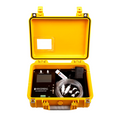
Novatek Novair 700 HEPA Air Scrubber and Negative Air Machine
$1,225
200 to 700 CFM on a variable dial, 45 lb and 3 amps.
Difference 3: knowing the pressure is actually negative
An air scrubber needs only a filter gauge. A negative air job needs proof that the room sits below the space around it. The filter gauge on a machine such as the H2KMA tells you when the filter is loading. It does not tell you the room pressure.

For room pressure you add a monitor. We carry the Abatement Technologies single-room pressure monitor RPM-RT1 at $1,210 and the portable differential pressure monitor PPM3-S at $1,400. For asbestos work, OSHA's construction asbestos standard (29 CFR 1926.1101) requires a negative pressure enclosure to keep at least 4 air changes per hour and 0.02 inches of water column below outside pressure, shown by manometer readings, with a smoke test for leaks at the start of each shift. For mold and renovation jobs, targets come from the project specification, so read what a negative pressure room is and how it is monitored and your project specification before you set a number.
Difference 4: air changes versus pressure
An air scrubber is sized by how often it turns over the room's air. Air changes per hour (ACH) is CFM x 60 divided by room volume in cubic feet. Abatement lists the PRED1200 at 6 ACH in 9,000 cubic feet, and our calculation agrees: 900 CFM x 60 / 9,000 = 6.
Abatement's PRED750 manual gives a sizing method: machines = (volume x design ACH) / (rated CFM x 60), rounded up. It says most users aim for at least 6 ACH when the job names none, and to pad the figure for dirty filters, duct drag and low voltage, for example 7.5 ACH for 25%. Our calculation for a 20 x 30 x 9 ft area (5,400 cubic feet) at 7.5 ACH: the PRED1200 at 900 CFM gives 5,400 x 7.5 / 54,000 = 0.75, so one machine. The Novair 700 at 700 CFM gives 5,400 x 7.5 / 42,000 = 0.96, so one machine with almost nothing to spare.
A negative air machine is judged on pressure, not only air changes: that depends on how tight the work area is. Plastic sheeting, taped seams and a clear path for make-up air all change the result.
Difference 5: power, size and price
| Machine | Rated airflow | Power as listed | Weight | Price |
|---|---|---|---|---|
| Abatement PREDATOR PRED1200 | Up to 900 CFM, variable | 120 VAC, 3.5 amps | 70 lb with filters | $2,230 |
| Abatement HEPA-AIRE H2KMA | 2,000 CFM high, 1,300 CFM low | 120 VAC, 15 A supply requirement | 124 lb with filters | $1,290 |
| Abatement BULLDOG BD2KM | 2,000 CFM high, 1,300 CFM low | 10.0 A operating | 117 lb with filters | $1,180 |
| Novatek Novair 700 | 200 to 700 CFM, variable | 115 V, 3 amps | 45 lb | $1,225 |
| Aerospace America Mighty Mite 9180 | 1,850 CFM high, 1,200 CFM low at 1.8 in running static pressure | 115 V, 9.4 running amps | 94 lb Standard, 120 lb Full Feature; 18 in wide | from $1,036 |
CFM figures are the makers' ratings and are rated under different conditions, so compare them within a brand's own sheet rather than across brands.
Is the ducted setup worth the extra cost?
If the job only needs cleaner air in an open room, probably not. The same unit in air scrubber mode costs nothing extra to run that way, and you skip the duct, the sealing and the monitor. If dust has to stay inside a defined area, the duct and a pressure monitor are part of the price of the job. A ducted Novair 700 with 25 ft of Duct-2-Go and a PPM3-S monitor comes to under $3,000 at today's prices.
A practical way to think about it: every unit here can work either way, so choose by size. The PRED1200 or Novair 700 suit smaller areas and lighter carrying, and the 2,000 CFM H2KMA or BULLDOG suit larger containments that need more airflow.
Setting up a ducted negative air machine
Follow the maker's manual for your unit.
- Seal the work area with sheeting and tape so air can only enter through the paths you plan.
- Place the machine inside the work area on the side farthest from the entry, so make-up air comes in through the entry and sweeps across the work area to the intake. Keep it out of the doorway: Novatek's Novair 700 manual says the unit must not impede any entrance or exit of the work area.
- Attach duct to the exhaust collar and run it to the space the job plan allows.
- Check the filters and the filter gauge, then plug in. Abatement's PRED750 manual calls for a 15 amp circuit free of other loads, a grounded GFCI outlet and, if you need an extension, a heavy-duty 14/3 SJTW cord no longer than 50 ft. The H2KMA lists a 120 V, 15 A supply requirement, so give each 2,000 CFM machine its own circuit.
- Start the machine and confirm the room pressure on a monitor. If it is not negative, tighten the seals or add airflow capacity.
- Run it through the job and change filters when the gauge or light says so.
- When the job and cleanup are done, switch off, cap or plug the intake (the PREDATOR ships with a foam inlet plug for this) and seal the duct ends before the machine leaves the work area.
More on this in our guide to negative air machine setup. For containment classes see what ICRA is, and for dust control on renovation jobs see dust control in construction.
Which one by job
| Job | Setup | Machine to look at |
|---|---|---|
| Sanding or demolition dust in an open room | Air scrubber mode | Abatement PREDATOR PRED1200 |
| Sealed work area, small to medium | Negative air with duct | Novatek Novair 700 with Duct-2-Go |
| Larger sealed area needing more airflow | Negative air with duct | Abatement HEPA-AIRE H2KMA or BULLDOG BD2KM |
| Narrow doorways and tight access | Either mode | Aerospace America Mighty Mite 9180 |

Steel-cabinet 2,000 CFM
Abatement Technologies HEPA-AIRE Series Deluxe Model Negative Air Machine H2KMA
$1,290
2,000 CFM high, a differential pressure gauge and audio change-filter alarm in a galvanized steel cabinet.

2,000 CFM, resin cabinet
Abatement Technologies BULLDOG Series Negative Air Machine BD2KM
$1,180
Same 2,000 CFM and 1,300 CFM speeds in a flame-retardant resin cabinet with a 10 amp operating draw.


Narrow cabinet
Aerospace America Aeroclean Mighty Mite 9180 1850 CFM HEPA Air Scrubber
$1,176
Only 18 inches wide for doorways. The Full Feature version adds a red LED warning light and audio alarm.
For mold jobs, see our picks in the best air scrubber for mold remediation. For the machine itself, see what an air scrubber is. For the difference from a consumer unit, see air scrubber vs air purifier. More models are in HEPA air scrubbers and Predator air scrubbers.
Frequently asked questions
What is a negative air machine?
It is a HEPA air filtration unit set up to exhaust air out of a work area. Because it removes air faster than air enters, the area sits at lower pressure than the space around it, which confines airborne particles.
Does an air scrubber need to be vented?
No. In recirculation mode an air scrubber returns filtered air to the room. Venting or ducting the exhaust is what turns the same unit into a negative air machine.
Can one machine do both jobs?
Yes. Every machine in this guide runs as a recirculating scrubber with nothing on the exhaust and has a round collar for duct. The PRED1200 lists 10 inch inlet and outlet collars and the Novair 700 a 12 inch intake and 10 inch exhaust. The H2KMA and BD2KM are sold as negative air machines, but undocked they work as large recirculating scrubbers too.
How do you know a work area is under negative pressure?
Read it on a manometer or pressure monitor placed across the containment wall. OSHA's asbestos rule also requires a smoke test for leaks before work and at the start of each shift.
Do air scrubbers remove odors?
A HEPA filter is for particles. Abatement lists an optional carbon filter for the PREDATOR series for low concentrations of odors, vapors and gases. It is not a fix for a strong source.
What does the HEPA rating on these machines mean?
It is the filter's tested efficiency on a 0.3 micron test particle. Abatement's PRED750 manual says each of its HEPA filters is individually tested and certified to a minimum of 99.97% against a 0.3 micron test aerosol. Novatek lists 99.99% at 0.3 microns for the Novair 700. More in what a HEPA filter is.
Set up negative air
Related guides
- Best Air Scrubber for Mold Remediation: 8 HEPA Machines Compared by CFM, Filter and Price
- What Is an Air Scrubber? How a HEPA Air Scrubber Works and When You Need One
- What Is a Negative Pressure Room? How It Works, Pressure Targets and Monitoring
- How to Set Up a Negative Air Machine and Create Negative Pressure in a Room