
How we made this guide: picks, prices and specs come from our catalog and the makers' published specs, owner quotes come from customer reviews on our product pages and every guide is checked and edited by Trevor Hall.
Flooded basement cleanup runs in a fixed order: power off at the panel (an electrician if the panel is wet), pump the standing water, pull out wet pad and porous debris, then dry with air movers and a dehumidifier until readings match an unaffected area. For the pumping step, use a flood pumper such as the EDIC FloodBuster FB50 at $4,132, and the drying step takes days, not hours. Clean water from a burst pipe is a job a careful owner can run; sewage, river water or a wet electrical panel is a job for a pro.
Quick answer
Safe first, then water out, then wet material out, then dry. A flood pumper, a wet/dry vacuum, air movers, an LGR dehumidifier and a moisture meter cover the whole job. Browse flood extractors for the pumping step. The full pro sequence for any water loss is in the water damage restoration process.
Equipment by step
| Step | Tool | Price | Key rating |
|---|---|---|---|
| Pump standing water | EDIC FloodBuster FB50 | $4,132 | 50 GPM pump, 158 in vacuum lift, 18 A |
| Corners and stairs | Tornado TaskForce 15 | $499 | 15 gal, 90 in lift, 114 CFM |
| Dry the structure | XPOWER X-800TF | $352 | 3,200 CFM rated, 7.5 A |
| Dehumidify | AlorAir Storm SLGR 1250X | $1,377 | 125 pints/day at AHAM, 8.1 A |
| Verify dry | Teledyne FLIR MR77 | $789 | Pinless to 0.75 in |
Buying one of each, with a single air mover, comes to under $8,000 at today's prices in our range, and most jobs need several air movers on top. For a restoration business this is the starting kit, with several air movers per basement; for a one-off job, start with the flood extractors and add drying gear as needed.
Step 1: Make the basement safe
Do this before you touch any equipment. Standing water and live electricity are the real danger.
- Turn off the power to the basement at the main panel, from a dry spot. If the panel or the floor in front of it is wet, stop and call an electrician.
- Do not wade through water that may reach outlets or cords.
- If the furnace, water heater or another gas appliance sat in water, leave it off until a qualified technician checks it. If you smell gas, leave the house and call the gas company from outside.
- Wear waterproof boots and gloves.
- Find the source. A burst supply line, a failed sump pump and rain seepage call for different fixes, and the water will keep coming until the source is handled.
Power the machines from a GFCI-protected outlet on a floor the water did not reach, or have an electrician check and restore the basement circuits first. If a cord will not reach, use a grounded heavy-duty extension cord rated for at least the machine's amp draw, and keep every plug connection up off the wet floor. If the water came from a sewer backup or a river, it is Category 3 water and a different job. The IICRC S500 standard says remediation should come before restorative drying on Category 2 or 3 water, with contamination controls and protective gear. Read Category 3 water damage explained and sewage backup cleanup before you start.
Step 2: Pump out the standing water
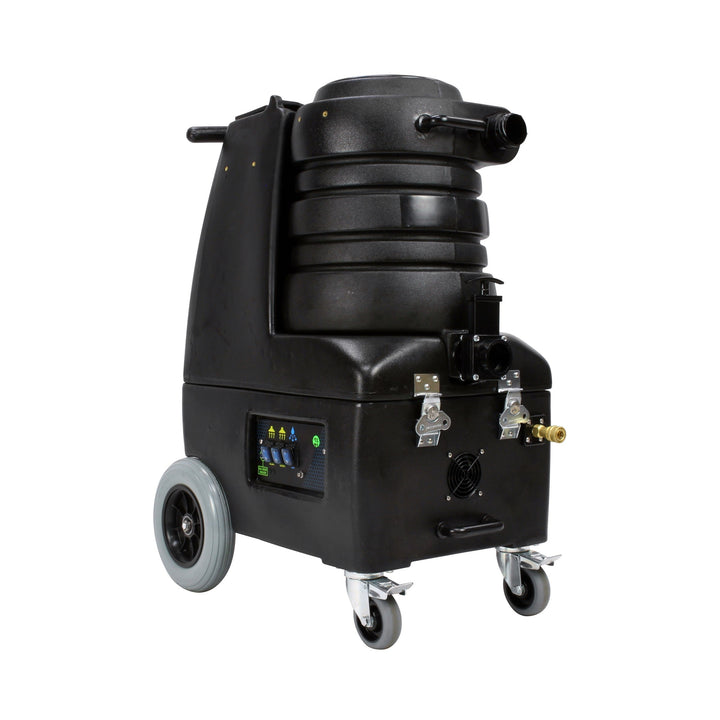
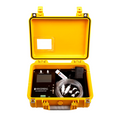
A flood pumper is a wet vacuum with a built-in pump that sends the recovered water out through a discharge hose, so it never stops to be emptied the way a shop vacuum does. That makes it the right tool when there is more water than you can keep dumping from a tank. The EDIC FloodBuster FB50's pump is rated at 50 gallons per minute and handles spherical solids up to half an inch, as listed. A stainless steel debris screen basket catches larger debris. Its 3-stage vacuum is rated at 158 inches of water lift and 110 CFM. It draws 18 amps on a single detachable 25 ft cord and weighs 101 lb.

Pump the standing water
EDIC FloodBuster Flood Pumper FB50
$4,132
50 GPM pump-out on one 25 ft cord, with a stainless steel debris screen basket.


Pros
- 50 GPM pump-out rating and 158 in vacuum water lift
- Stainless steel debris screen basket
- Two-year parts and labor warranty, lifetime on the housing, as listed
Cons
- 101 lb machine to move on stairs
- 18 A draw is more than a 15 A circuit carries, so it needs a 20 A circuit with nothing else on it
Skip it if the water is only a few inches deep over a small area. A wet/dry vacuum handles that.
How fast to pump
Do not drain a deep basement in one go while the ground outside is still soaked. FEMA's guidance (a 2019 release with the Nebraska Emergency Management Agency) says to begin pumping only when floodwaters no longer cover the ground outside. Pump out 1 foot of water, mark the level and wait overnight. If the water has risen back over your mark, it is still too early to drain the basement. When the water stops returning to the mark, pump out 2 to 3 feet and wait overnight, then repeat daily until the water is out. FEMA's reason: water still in the ground pushes on the outside of the walls, and draining too fast can crack or collapse the walls, floor or foundation. Follow your local emergency office if it says otherwise.
If a burst pipe flooded the basement and the ground outside is dry, the reason for FEMA's staged method (soaked ground pushing on the walls) does not apply, so you can pump it out in one go.
Step 3: Get the last water out of corners and stairs
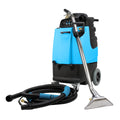
A pumper leaves a film and puddles in low spots, corners and stair treads. A wet/dry canister vacuum finishes the job. The Tornado TaskForce 15 at $499 holds 15 gallons, with a listed 90 inch water lift and 114 CFM of airflow, and it has four transport wheels and a 360 degree hose rotation.

Corners and stairs
Tornado Taskforce 15 Wet/Dry Industrial Canister Vacuum (94232)
$499
15 gallon wet/dry canister for what the pumper cannot reach.
Skip it if you already own a wet/dry vacuum with a similar tank. How to use a shop vac for water covers smaller jobs.
Step 4: Remove wet carpet, pad and porous debris
Water soaks into anything porous, and it will not dry in place in a closed basement. Take out wet pad, loose insulation, particle board and cardboard storage. Cut wet drywall off the bottom of the wall if it will not dry otherwise; the guide on drying water damaged walls covers when a wall can stay and when it must go.
Carpet is a decision, not a default. If it can be lifted, extracted and dried quickly, the carpet drying guide at how to dry wet carpet covers the extraction and airflow. Contaminated flood water means the carpet and pad go out.
Step 5: Dry with air movers
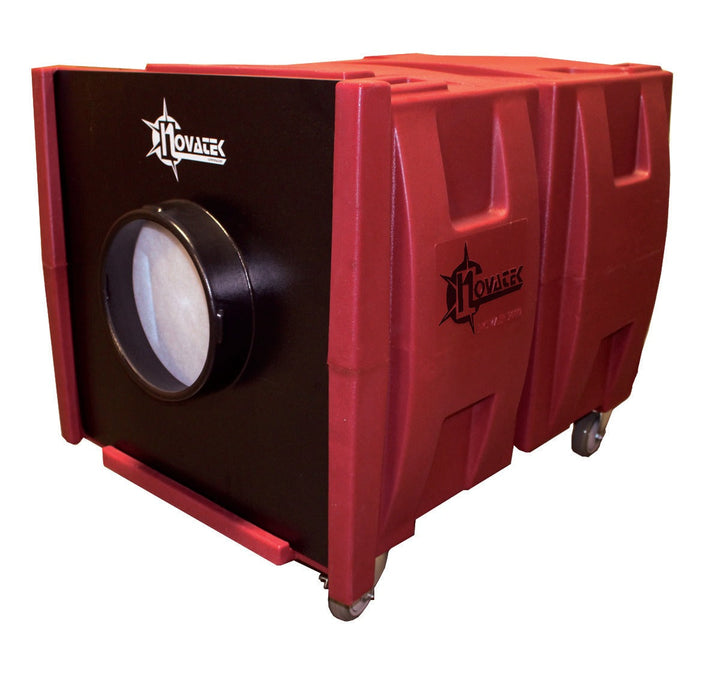
Air movers drive the evaporation. Point them along the walls and across the floor so air keeps moving over every wet surface, and keep the doors and windows closed so the dehumidifier is working on the same air. The XPOWER X-800TF at $352 is rated at 3,200 CFM, with three speeds, a 3-hour timer, four operating positions and a filter kit. It draws 7.5 amps on a 25 ft cord.

Air mover
XPOWER 3/4 HP 3200 CFM 3 Speed Air Mover, Floor Fan, Dryer, Blower with Timer and Filter Kit X-800TF
$352
3,200 CFM rated, 7.5 A, with a timer and four operating positions.

Count amps before you plug in. Our calculation: one X-800TF draws 7.5 A, so two draw 2 x 7.5 = 15 A, the full rating of a 15 A circuit with no headroom for machines that run for days. Plan one X-800TF per 15 A circuit, or two on a 20 A circuit. AlorAir lists a grounded GFCI outlet on a 15 A circuit for the dehumidifier in the next step, and its 8.1 A plus one air mover's 7.5 A comes to 15.6 A, so keep the dehumidifier on a circuit without an air mover. Browse our air movers for other sizes, and the guide to air movers versus fans explains centrifugal and axial units.
Plan enough units to keep air moving along every wet wall and across the wet floor, and size the count to your circuits with the calculation above. Skip it if the area is a single small room; one smaller air mover may be enough.
Step 6: Dehumidify with an LGR unit
Air movers lift moisture into the air. A dehumidifier takes it out, which is what finishes the drying. The AlorAir Storm SLGR 1250X at $1,377 is rated at 125 pints a day at AHAM conditions (80F, 60% RH) and 264 pints a day at saturation (90F, 90% RH), as AlorAir lists. It has a built-in condensate pump that pushes water through a hose to an outlet up to 15 ft higher, as listed, plus a MERV-8 filter, WiFi control and an operating range of 33.8F to 110F. It draws 8.1 amps.

LGR dehumidifier
AlorAir Storm SLGR 1250X 125-Pint WiFi Commercial Dehumidifier with Pump
$1,377
Built-in pump, 125 pints a day at AHAM and 33.8F to 110F operating range.
The two ratings are different test conditions, so never compare the AHAM figure with a saturation figure from another maker. How many units a room needs is covered in dehumidifiers for water damage and what size dehumidifier do I need. Browse LGR dehumidifiers for other sizes.
Skip it if the basement stays below the unit's 33.8F lower limit; a desiccant model suits cold spaces better.
Step 7: Check that it is actually dry
Dry to the touch is not dry. The IICRC S500 water damage standard has restorers set dry standards and drying goals at the start of the job. In practice the reference is the same material in a part of the house the water never reached: read it first, then keep drying until the wet materials read the same as, or very close to, that reference.
The Teledyne FLIR MR77 at $789 has a pinless sensor that reads up to 0.75 inches deep, with a remote pin probe and a temperature and humidity sensor, so wall readings and the air check come from one tool.

Moisture meter
FLIR MR77 5-in-1 Moisture Meter with METERLiNK Technology
$789
Pinless sensor, remote pin probe and a humidity sensor in one meter.

| Check | Where to take it | What counts as dry |
|---|---|---|
| Material moisture | Wall base and framing, plus the slab | Reads the same as, or very close to, the same material in an unaffected area |
| Reference reading | Same material in a dry room | This is your target, so take it first |
| Air temperature and humidity | Middle of the drying room, with the equipment running | Humidity (grains per pound) falling each day while the room stays warm; the grains check is in the psychrometric chart guide |
| Surface check | Corners, behind trim, the lowest 2 feet of the wall | Meter readings in these spots match the reference |
Typical readings by material are in the moisture meter readings chart, and best moisture meters for water damage compares the field. Browse moisture meters too. Skip the MR77 if you only need a quick pass over drywall and have no use for the pin probe or the humidity sensor.
Mold risk climbs as drying drags on: see basement mold remediation if growth is visible and the best basement dehumidifiers for long-term humidity.
Common mistakes
- Pumping a deep basement dry in an hour while the soil outside is saturated.
- Leaving wet pad or carpet down because the top feels dry.
- Running air movers with the dehumidifier in another room or the door open.
- Putting four machines on one 15 A circuit and tripping the breaker overnight.
- Stopping when the surface looks dry instead of when readings match the reference.
Frequently asked questions
What do I do first if my basement just flooded?
Turn the power off at the panel from a dry spot, and call an electrician if the panel is wet. Then stop the source if you can. Pumping comes after the basement is safe.
How do I drain a flooded basement?
Use a flood pumper or a sump pump with a hose that discharges well away from the foundation. If the ground outside is saturated, pump in stages as the FEMA guidance above describes, rather than all at once.
How long does a flooded basement take to dry?
It takes days, depending on the materials, the temperature and the water volume. The only dependable end point is a moisture meter reading that matches an unaffected area.
Should I run a dehumidifier after a water leak?
Yes. Keep the room closed so the dehumidifier works on the same air your air movers are moving. It removes the moisture those fans lift out of the materials.
What can I put in my basement to soak up water?
Towels and absorbent pads work for small leftover wet patches. Anything more needs extraction, because absorbents leave most of the water in the floor and walls.
How much does flooded basement cleanup cost?
It depends on depth, area, water category and how much material has to be removed. Ask any contractor for a written scope that lists the equipment and the days of drying. Buying one of each machine in this guide comes to under $8,000 at today's prices in our range, and most jobs need several air movers on top.
Can I dry a flooded basement myself?
For clean water from a plumbing failure, many owners do. Sewage or river water, a wet electrical panel or structural worries mean it is time for professionals.
Who do you call to clean up a flooded basement?
An electrician if the panel or outlets got wet, a plumber if a pipe or the sump pump failed, and a water damage restoration company for sewage, river water or more than you can dry yourself. Call your insurer early too.
Will insurance cover a flooded basement?
It depends on your policy and on where the water came from, so call your insurer before you throw anything out. Photograph the water line and the damaged materials, and keep your moisture readings from wet to dry.
Get the water out first
Related guides
- How to Dry Wet Carpet After a Leak or Flood (and Stop the Smell)
- Water Damage Restoration Process: The Steps Pros Follow From Extraction to Dry
- Dehumidifiers for Water Damage: LGR vs Conventional vs Desiccant and How Many You Need
- How to Use a Shop Vac for Water: Filter Setup, Emptying and When to Get a Flood Pumper