
How we made this guide: picks, prices and specs come from our catalog and the makers' published specs, owner quotes come from customer reviews on our product pages and every guide is checked and edited by Trevor Hall.
Sewage is Category 3 water under the IICRC S500 standard, so the job is contain, protect the crew, extract, tear out what soaked up the water, clean, dry under negative air and verify dry before rebuilding. CDC advises cleaning up and drying within 24 to 48 hours if possible, and EPA says to call a professional when sewage caused the damage.
Quick answer
Difficulty is high: the water carries contamination, and the work is mostly demolition, disposal and drying that follow one another. This guide covers the order of work, what to keep or tear out, the protective gear named by CDC and OSHA, and the equipment for each step. We sell none of the protective gear. We do carry the extraction, air filtration and drying machines: flood extractors, HEPA air scrubbers, air movers and flood restoration dehumidifiers.
EPA's mold and moisture guide tells owners to bring in an experienced professional when sewage or other contaminated water caused the damage. Only a very small spill on a hard floor is a do-it-yourself job.
This page covers the work itself. For how the water categories and classes are defined, read Category 3 water damage, explained. For the wider job from first call to dry-out, see the water damage restoration process.
Why sewage changes the job
Clean-water losses are mostly a drying problem. A sewer backup or drain overflow is a contamination problem first and a drying problem second. S500 classes sewage as Category 3, its grossly contaminated category. That is why the carpet, padding, drywall and insulation it soaks are removed rather than dried (CDC says to discard drywall and insulation contaminated with sewage), and why the people doing the work wear protective gear throughout.
OSHA's flood guidance tells workers to assume floodwater is contaminated unless it is proven otherwise. Treat a sewage backup the same way.
Equipment and gear for each step
| Step | What it does | Gear or machine |
|---|---|---|
| 1. Isolate and protect | Keeps people out and limits where dust and debris travel | Poly sheeting, tape, protective gear |
| 2. Run negative air | Draws air from the work area through the filters before tear-out starts | A HEPA air scrubber set up as a negative air machine |
| 3. Extract water and solids | Removes standing water and the sludge in it | Flood pumper or flood extractor |
| 4. Remove porous materials | Takes out what cannot be cleaned or dried quickly | Hand tools, contractor bags, a HEPA air scrubber running |
| 5. Clean what stays | Washes surfaces that remain | Detergent and water, applied per the product label |
| 6. Dry | Brings moisture in the structure down | Air movers and a dehumidifier |
| 7. Verify | Confirms the materials are dry before rebuilding | Moisture meter and readings against a dry reference |
Step 1: Isolate the area and gear up
Shut off the source if you can reach it without stepping in the water, keep other people out and stop the spread of dust and debris before anything is moved. CDC says that if you would have to enter standing water to reach the main power switch, call an electrician to turn it off. Keep cords, plugs and machines out of standing water.

CDC names rubber boots, rubber gloves and goggles for sewage work, and goggles, an N-95 respirator and protective gloves for mold cleanup. OSHA names waterproof boots, latex or rubber gloves and other protective clothing for floodwater. OSHA's respiratory protection standard (29 CFR 1910.134) requires employers to evaluate the respiratory hazards before choosing a respirator. CDC says to wash up with soap and water once you are done cleaning.
- Waterproof boots and rubber or latex gloves that can be washed or thrown away.
- Goggles for splash protection.
- A respirator chosen for the hazards on the job under OSHA's respirator rules, not guessed.
Step 2: Run negative air before demolition
Negative air goes up before tear-out starts. Pulling ripped-out material apart throws dust and debris into the room, and a filtered machine that draws air from the work area gives that air somewhere to go. What a negative pressure room is and how an air scrubber differs from a negative air machine cover the setup in more detail, and the air changes per hour formula shows how to work out how often a room's air passes through the filters.

Negative air for the work area
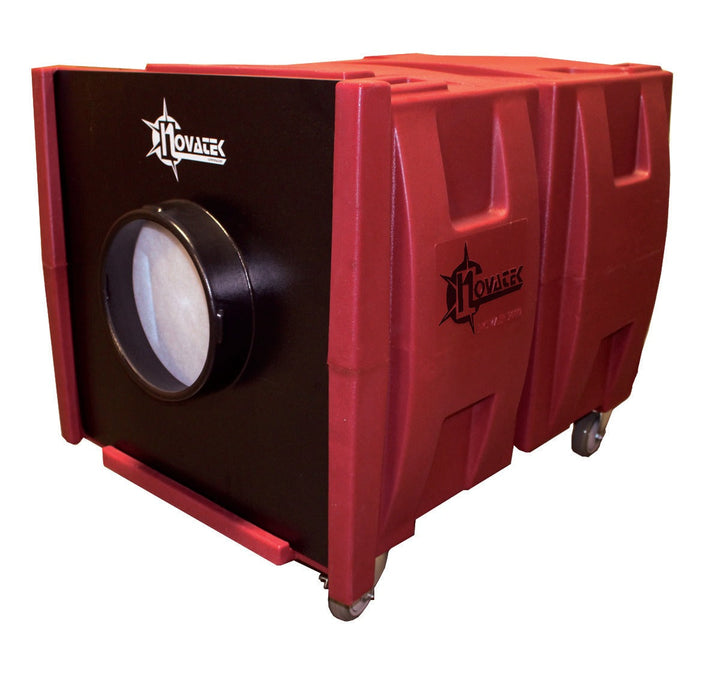
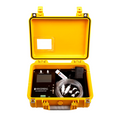
Novatek Novair 2000 Bio HEPA Air Scrubber and Negative Air Machine
$3,450
A 2,000 cfm unit with a V-pack HEPA filter and filter alarms, used as the negative air machine for a containment.
The Novatek Novair 2000 Bio is listed at $3,450. Novatek's Novair 2000 Bio manual rates it at 2,000 cfm on high and 1,200 cfm on low, and rates the final-stage HEPA filter at 99.995% at 0.3 micron. Audible and visual alarms trip at 3.0 to 3.4 inches of water column, and an hour meter is standard.
Novatek's manual calls for a 115 volt, 15 amp power source on a dedicated 15 amp circuit; it does not publish a running amp draw. An extension cord is not supplied; the listing recommends 12 AWG up to 25 feet. At 140 lb it rolls between rooms on its casters; stairs take two people.
Pros
- High-speed airflow of 2,000 cfm as listed.
- Alarms for loaded filters on both the side and back.
- Hour meter for logging run time on a job.
Cons
- Needs its own dedicated 15 amp circuit, per Novatek's manual, so the air movers and dehumidifier need other circuits.
- At 140 lb it is not a one-hand carry.
Skip it if the area is a single small room and a smaller scrubber covers the airflow you need.
Novatek's video shows the standard Novair 2000 that the Bio is built on.
Step 3: Extract the water and solids
Standing water goes first. A sewage backup leaves sludge and solids in the water, so a shop vacuum's small tank means carrying contaminated water out by the bucket (when a shop vac stops being enough). A flood pumper that pumps its tank out through a hose keeps working without carrying buckets of contaminated water through the house. The flooded basement cleanup guide covers pumping a whole basement.

Flood pumper
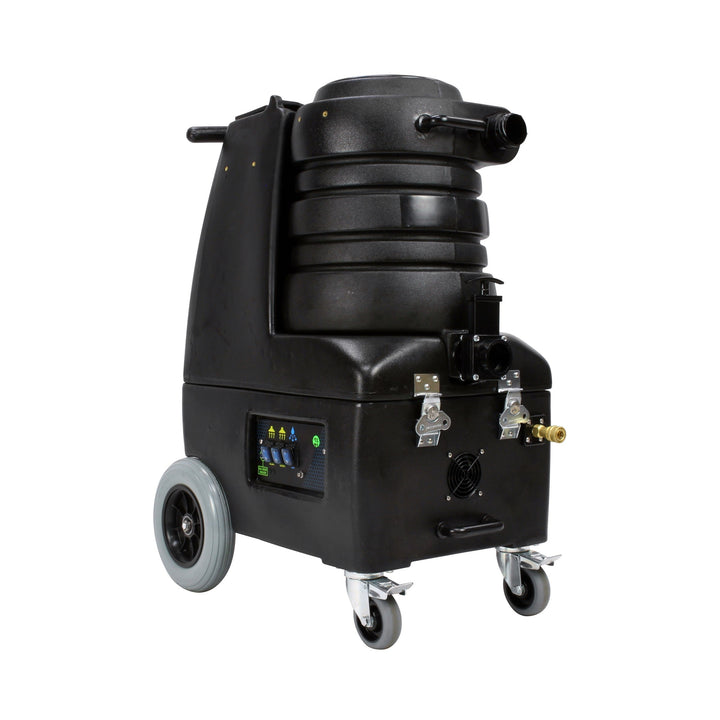
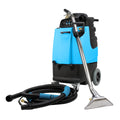
Sandia Sniper 24-Gallon 2-Stage Flood Pumper - 80-6001
$2,892
A 24 gallon tank with an automatic pump-out, for water that carries sludge and solids.
The Sandia Sniper 24 gallon flood pumper, model 80-6001, is listed at $2,892. Our listing gives a 24 gallon tank, 14.3 amps at 115 volts, a 25 ft hose and a 25 ft cord. Sandia's specification sheet rates the vacuum at 520 air watts, a suction rating rather than the power the machine draws. Sandia's own sheet lists a pump-out rate of 40 gallons per minute and says the machine can pump out liquid, sludge and solids up to one half inch in diameter. It also lists water lift of 110 inches, 120 CFM and a 106 lb dry weight.
The dump hose must run to an approved discharge point; where that is on a sewage job is a decision for the contractor and local rules.
Pros
- Pumps out sludge and solids up to one half inch, per Sandia.
- Automatic pump-out removes the carry-and-dump routine.
- Recessed, waist-high controls.
Cons
- At 106 lb dry it is a two-person lift, though Sandia fits 10 inch wheels for stair climbing.
- At 14.3 amps it needs a 15 amp circuit to itself, so the air movers and dehumidifier go on other circuits (our calculation from Sandia's 14.3 A rating).
Skip it if the water is only a few inches over a small area and a smaller extractor will clear it.
Step 4: Remove what cannot be cleaned or dried quickly
This is the part of the job that decides the cost. CDC says to remove and discard drywall and insulation that has been contaminated with sewage or floodwater, and to throw away items you cannot clean or dry quickly, such as mattresses, carpeting, carpet padding, rugs and upholstered furniture. EPA's mold guidance makes a related point: porous materials like ceiling tiles and carpet can be difficult to restore once mold has grown into them.
| Material | After a sewage backup | Source |
|---|---|---|
| Carpet and carpet padding | Discard | CDC lists carpeting, padding and rugs among items to throw away |
| Upholstered furniture and mattresses | Discard | CDC |
| Drywall | Remove and discard | CDC |
| Insulation | Remove and discard | CDC |
| Hard, non-porous surfaces such as concrete, metal and sealed flooring | Clean thoroughly with hot water and detergent | CDC |
| Wood framing, subfloor and trim | Clean thoroughly with hot water and detergent, dry, then confirm with moisture readings before closing up; replace pieces too damaged to clean | CDC lists molding and wood among the surfaces to clean |
Cut drywall above the wet line, bag it where it is removed and carry the bags out without dragging them through clean rooms. Keep the air scrubber running while you work, and keep the doors to the work area closed.
Step 5: Clean what stays
CDC says to clean all wet items and surfaces thoroughly with hot water and laundry or dish detergent, listing flooring, concrete, molding, wood and metal furniture and countertops among them. Any antimicrobial product you add is applied per its label, including the contact time and ventilation it calls for. CDC also says never to mix bleach with ammonia or any other cleaner, and never to use bleach in a closed space.
Clean the pumper's tank, hoses and tools. Wipe down the air movers, dehumidifier and air scrubber cabinet before they leave the job, and bag used prefilters where they come out.
A clean surface still has to dry. CDC advises cleaning up and drying the home within 24 to 48 hours if possible, and EPA gives the same window for drying water-damaged areas to prevent mold growth.
Step 6: Dry the structure under negative air
With the porous material out and the surfaces cleaned, the remaining framing and floor have to dry. Do not start air movers until the sewage-soaked materials are out and the remaining surfaces are cleaned; blowing air across contaminated material spreads contaminated dust and debris through the building. Once that is done, air movers push air across the wet surfaces and a dehumidifier takes the moisture out of the air. Dehumidifiers for water damage explains how LGR, conventional and desiccant machines differ and how many a job needs.


Air mover
$467
A stackable, ductable air mover with four preset angles for moving air across wet surfaces.
The Ebac AM2000 is listed at $467. The listing gives 1,060 CFM, a 5 amp maximum on 115 volts, 550 W and 52 dBA. It has three fan speeds and four operating positions (0, 15, 45 and 90 degrees). The listing gives an operating range of 32°F to 95°F and a weight of 26.4 lb.
Pros
- Light at 26.4 lb, so one person can carry it.
- Stackable for the truck and ductable for directed airflow.
- Low 5 amp draw leaves room on a circuit for other machines.
Cons
- The operating range stops at 32°F, so it is not a fit for a freezing space.
Skip it if you need a high-volume blower for a large open area and a larger air mover from the air movers collection suits the job better.

Restoration dehumidifier
Ebac RM85 Series Flood Restoration Dehumidifier
From $2,600
A 70 pint flood restoration dehumidifier with an internal condensate pump and a continuous drain.
The Ebac RM85 Series is listed at $2,600 without a humidistat and $2,680 with one. Ebac's brochure gives 70 pints per day as "typical extraction" without the test conditions, so it cannot be compared directly with an AHAM rating. It has an internal condensate pump, a 25 ft drain hose and a recommended room size of 1,000 sq. ft. It is not an LGR machine.

Ebac's brochure lists a minimum operating temperature of 37°F and a maximum of 95°F. The listing gives a noise level of 52 dB.
Pros
- Internal pump and drain hose, so it can run unattended into a drain.
- Rotomolded housing made for repeated job-site moves.
- Humidistat or no-humidistat versions.
Cons
- Not an LGR machine, so it will not pull the air as dry as an LGR unit in the last stage of a drying job.
- Stops at 37°F, per Ebac.
Skip it if the job needs an LGR machine; the flood restoration dehumidifiers collection lists the others.
Power at a glance (our calculation from the makers' ratings)
| Machine | Electrical figure | Source |
|---|---|---|
| Novatek Novair 2000 Bio | Dedicated 15 A circuit | Novatek manual |
| Sandia 80-6001 | 14.3 A | Sandia spec sheet |
| Ebac AM2000 | 5 A maximum | Our listing |
| Ebac RM85 | 6 A | Ebac brochure |
Two AM2000s plus one RM85 total 16 A, more than one 15 A circuit.
Step 7: Verify it is dry before rebuilding
Do not close walls on a guess. Take moisture readings on the framing and subfloor and compare them with a reading from a material in the building that was never wet. Keep the equipment running until the readings match, then remove the machines. If a reading stalls, check the grains per pound in the room and at the dehumidifier outlet, then look for a hidden wet pocket before adding machines. How to read a psychrometric chart explains the readings. How to dry wet carpet and drying hardwood floors cover the drying side for those materials.
Notes by job size
- Small spill on a hard floor: steps 1, 3 and 5 are usually enough.
- One room with carpet or drywall soaked: all seven steps apply, and a restoration contractor should take the job if the water came from a sewer line.
- A whole basement or crawl space: a restoration contractor takes over.
Common mistakes
- Moving debris through clean rooms before the negative air machine is running.
- Trying to dry carpet and padding that CDC says to throw away.
- Starting air movers before the porous materials are out and the surfaces are cleaned.
- Mixing bleach with ammonia or another cleaner, or using bleach in a closed space.
- Using a household shop vacuum on water that carries sludge and solids.
- Skipping the last step. Closing walls without readings invites a second job.
- Treating a large or recurring backup as a do-it-yourself job when a contractor should be called.
Frequently asked questions
What dissolves sewage sludge?
On a restoration job, sludge is not dissolved. It is pumped or scooped up as solids and liquids, bagged and disposed of, then the surfaces are cleaned. A flood pumper moves the liquid and sludge together; the solids it cannot pass are removed by hand.
How does sewer water get cleaned?
Municipal wastewater is treated at a treatment plant, which is plumbing and utility work outside what we sell. Inside a building, the cleanup is the contain, extract, remove and dry sequence above.
How often should a sewer line be cleaned?
That is a plumbing question, and the interval depends on the pipe and its history. A licensed plumber can inspect the line and set a schedule. A backup that repeats is a sign to have it checked.
How long do sewer bacteria live on surfaces?
Do not plan the job around a waiting time. Treat every surface the water touched as contaminated until it has been cleaned with hot water and detergent, as CDC's cleanup guidance says. Keep children and pets away from the area until cleanup is complete.
Can I clean up a sewage backup myself?
EPA advises calling a professional with experience in buildings damaged by contaminated water. A very small, contained spill is a different case than a flooded room, and the protective gear and disposal steps above still apply.
How do you clean up sewage in a crawl space?
The order of work is the same in a tighter space: containment at the access, negative air, remove the soaked vapor barrier and insulation, clean, dry and verify. Crawl space mold remediation covers working in that space.
What can cause a sewage backup?
The usual cause is a blocked or overloaded sewer line that pushes wastewater back into the building. A plumber finds the blockage.
What is sewer cleaning called, and how do you clear a backed-up sewer line?
Sewer cleaning is called drain or sewer line cleaning. A plumber does it by rodding or hydro jetting, which is separate from the cleanup of the building described above.
Set up for Category 3
Related guides
- Category 3 Water Damage, Explained: The IICRC S500 Categories and Classes in One Table
- Water Damage Restoration Process: The Steps Pros Follow From Extraction to Dry
- Flooded Basement Cleanup: How to Pump, Extract and Dry It Out
- Dehumidifiers for Water Damage: LGR vs Conventional vs Desiccant and How Many You Need